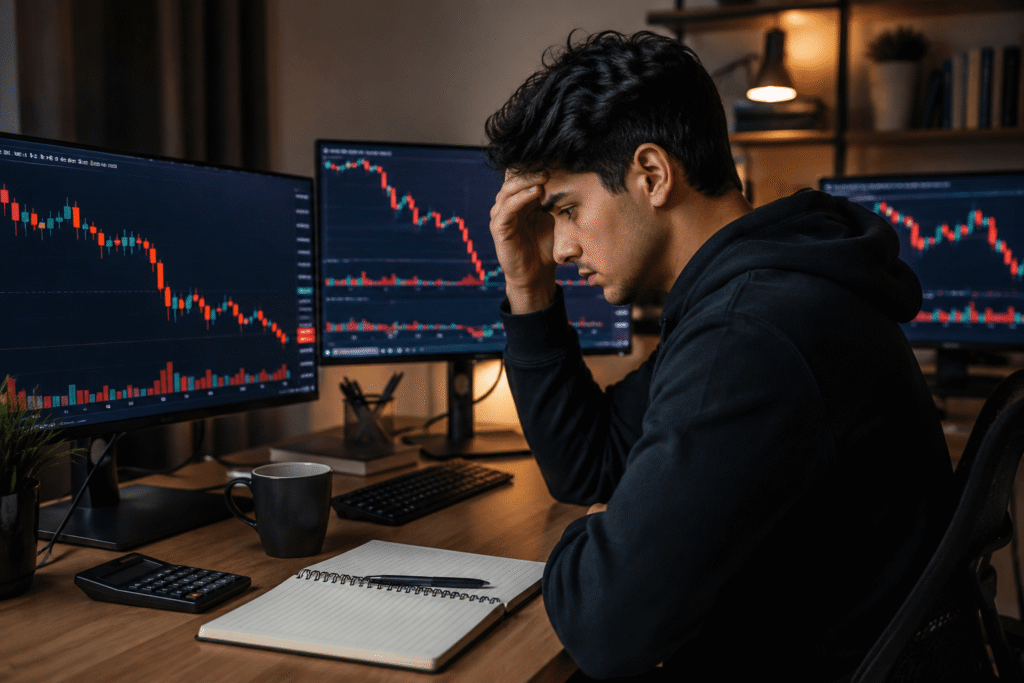
Many new traders lose money in their first month, and this is more common than you might think. The good news is that early losses do not mean you cannot become a successful trader.
Most beginners face challenges because they are still learning how the market works and how to make better decisions. Understanding the real reasons behind these losses can help you avoid the same mistakes.
In this guide, we explain the most common reasons new traders lose money in their first month and share practical tips to help you trade with more confidence and improve your results.
Why Do New Traders Lose Money in Their First Month?
Many traders lose money in their first month because of some common mistakes. Some also fall victim to fraudulent companies by choosing untrusted platforms. Always choose a trusted trading platform before you start. By avoiding these mistakes, you can improve your trading skills and increase your chances of success. Every successful trader starts as a beginner and learns from experience.
1. Trading Without a Plan
Many new traders enter the market without a clear plan. They open trades based on feelings, social media tips, or random signals. This usually leads to poor decisions and unnecessary losses.
Before every trade, make a realistic trading plan. know your entry point, stop-loss, take-profit, and risk amount. A simple trading plan helps you stay disciplined and avoid emotional decisions, even when the market moves against you.
2. Risking Too Much on One Trade
Many beginners think one big trade can recover previous losses or grow their account quickly. This mindset often ends with a large loss. Risk only a small part of your account on each trade. Many experienced traders risk 1% or less per trade. Small risks help you survive losing streaks and give you more chances to improve.
3. Overtrading
New traders often believe more trades mean more profit. In reality, too many trades usually create more mistakes. Every trade should have a good reason. If you cannot find a quality setup, wait patiently. Professional traders know that protecting their money is more important than opening trades all day. Sometimes the best decision is to stay out of the market.
4. Ignoring Stop Losses
Some beginners remove their stop-loss because they hope the market will turn around. Others never use one at all. This can turn a small loss into a much bigger problem. A stop-loss protects your trading account when the market moves against you. Accepting a small loss today is much better than losing a large part of your account.

5. Letting Emotions Control Decisions
Fear and greed affect almost every new trader. Fear makes you close winning trades too early. Greed makes you hold losing trades for too long or risk more than you should. Successful traders follow their trading plan instead of their emotions. Staying calm helps you make better decisions and build confidence over time.
6. Using Too Much Leverage
Leverage allows you to control larger positions with less money. While this sounds attractive, it also increases your risk. A small market move can create a large loss if your position is too big. Many beginners lose money because they use the highest leverage available. Start with lower leverage until you gain more experience and confidence.
7. Changing Strategies Too Often
Many new traders switch to a new strategy after only a few losing trades. They never give one method enough time to prove its value. Every trading strategy has both winning and losing periods. Test one strategy carefully, practice it, and keep improving it. Consistency often produces better results than constantly searching for the perfect system.
8. Expecting Fast Profits
Many beginners start trading because they believe they can make easy money within days. When quick profits do not happen, they become frustrated and take bigger risks. Trading is a skill that takes time to develop. Focus on learning, protecting your money, and improving every week. Steady progress usually leads to better long-term results than chasing quick profits.
9. Not Reviewing Past Trades
Many traders close a trade and immediately look for the next opportunity. They never study what went right or wrong. This slows down their progress. Keep a simple trading journal with your entry, exit, reason for the trade, and result. Reviewing your trades helps you spot mistakes, improve your strategy, and become a more confident trader.
10. Copying Someone Else’s Trading Style Without Testing
Many new traders copy a trading style after watching YouTube videos or listening to friends. They never test whether the strategy matches their personality or risk tolerance. This often leads to confusion and losses.
Every trader is different. Before using any strategy with real money, test it on a demo account or backtest it with historical data. Choose a trading style that fits your goals, schedule, and comfort level.
How to Avoid Losing Money in Your First Month of Trading
Losing money in your first month does not mean you cannot become a successful trader. Every experienced trader has made mistakes while learning. The key is to learn from those mistakes instead of repeating them. Start with a simple trading plan, manage your risk, and avoid emotional decisions.
Practice on a demo account before trading with real money. Review every trade and improve your strategy over time. Focus on building good habits instead of making quick profits. Consistent learning and discipline will help you become a better trader.

Final Thoughts
Losing money in your first month of trading is not the end of your journey. Almost every successful trader has faced losses while learning. The important thing is to understand your mistakes and avoid repeating them.
Focus on learning, managing risk, and following a clear trading plan instead of chasing quick profits. Stay patient and keep improving your skills with every trade. Over time, these good habits can help you become a more confident, disciplined, and consistent trader.
Frequently Asked Questions
What are the common reasons new traders lose money in their first month
Most new traders lose money because they trade without a plan, risk too much on each trade, use high leverage, let emotions control their decisions, or fail to manage risk properly. These mistakes are common reasons new traders lose money in their first month but can be avoided with practice and discipline.
How much should a beginner risk on one trade?
Many experienced traders recommend risking no more than 1% of your trading account on a single trade. Keeping your risk small helps protect your capital and allows you to recover more easily from losing trades.
Should beginners use a demo account before trading with real money?
Yes. A demo account lets you practice trading without risking real money. It helps you learn how the market works, test your trading strategy, and build confidence before moving to a live account.
How long does it take to become a profitable trader?
There is no fixed timeline. Some traders become profitable within several months, while others need a few years. Success depends on consistent learning, practice, discipline, and proper risk management.
Can I become a successful trader even if I lose money in my first month?
Yes. Many successful traders lost money when they first started. The important thing is to learn from your mistakes, improve your trading plan, manage your risk, and continue practicing instead of giving up.