Prop traders are using ChatGPT more now. It helps with daily trading tasks. But many traders use it in the wrong way and sometimes become fully dependent on it. Wrong use can lead to account failure very quickly. “Biggest Mistakes Prop Traders Make when Using ChatGPT” is a key topic today.
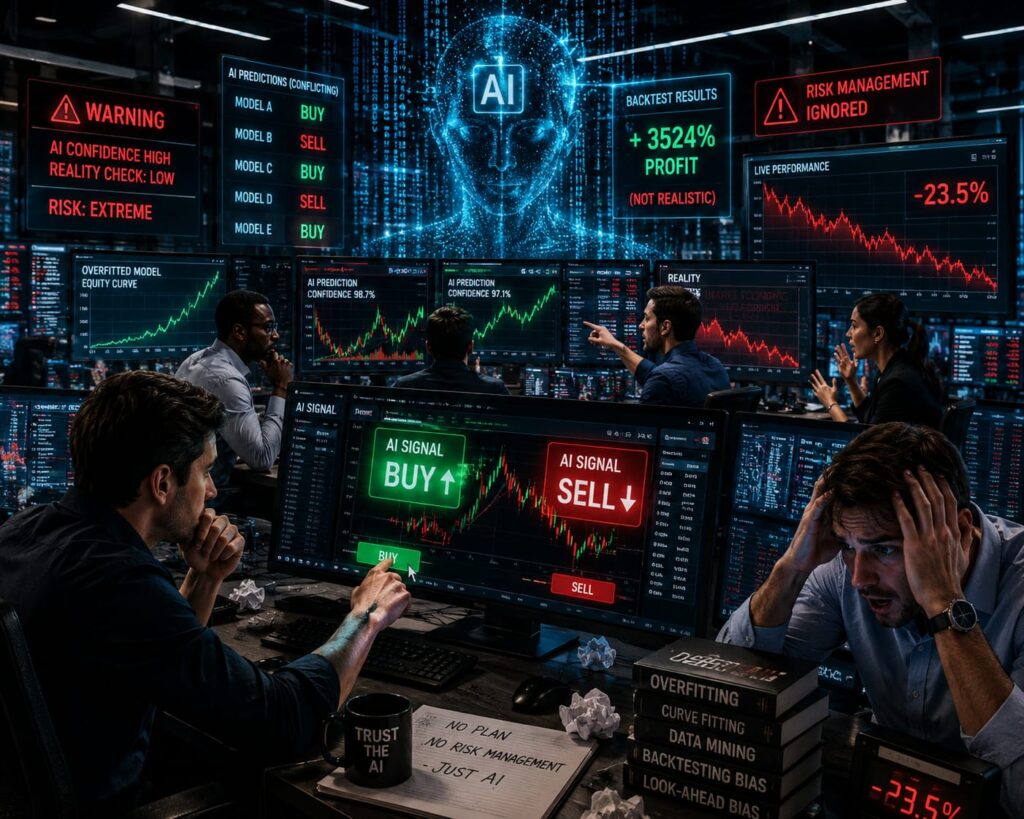
AI looks smart, but it has limits. It cannot read live market charts. It also cannot manage real trading risk. So traders must always stay careful. Most losses come from bad use, not from AI itself.
Many traders working with the best prop firms use ChatGPT to improve their trading process, but they still rely on their own judgment when making decisions. This guide shows real mistakes and the correct way to use them. Simple rules can save accounts. Let’s break it down clearly.
What Role ChatGPT Plays in Prop Trading
ChatGPT helps prop traders every day. It supports thinking and planning work, but it does not trade the market itself. Mistakes Prop Traders Make when Using ChatGPT often happen when traders rely on it too much.
How traders use ChatGPT
- Writing trade journals
- Generating new trading strategy ideas
- Supporting trading psychology and emotions
- Improving understanding of trading rules
- Reviewing trading mistakes
To understand the broader trading structure, it is important to know how proprietary trading firms operate in real markets. ChatGPT works like an assistant tool. It helps traders think faster and organize their ideas in a clear way. It can help structure trading plans, but it cannot see live charts or feel market pressure.
So, trader control is very important. Prop traders must stay active and make their own decisions. AI only supports thinking and analysis. It should never replace real trading judgment. Smart traders use it in a simple way and always avoid over-dependence.

10 Common Mistakes Traders Make When Using ChatGPT
Prop traders lose funding fast. The main reason is wrong AI use. Here are some common mistakes prop traders make when using ChatGPT. But traders ignore basic rules.
1. Treating ChatGPT as a Trading Guru
Many traders believe everything ChatGPT says is correct. This is a mistake because ChatGPT can sometimes provide inaccurate or outdated information. It does not predict the future or know exactly what the market will do next.
If traders follow every suggestion without checking it themselves, they can make costly mistakes. ChatGPT should be used as a helper, not as a trading guru. Always verify information before making trading decisions.
2. Asking for Trade Signals Instead of Learning
Some traders use ChatGPT only to find buy and sell signals. They ask questions like “Should I buy EURUSD now?” or “Which stock will go up today?” This creates dependency on AI rather than building real trading skills.
Successful traders learn how markets work and develop their own understanding. ChatGPT is better used for education and strategy improvement. Learning will help you far more than chasing random signals.
3. Using Vague Prompts
The quality of ChatGPT’s answers depends on the quality of your questions. If you ask vague questions, you will usually get vague answers. For example, asking “How can I trade better?” is too broad.
This is one of the common mistakes prop traders make when using ChatGPT. A more detailed question will produce a more useful response. Good prompts provide context, goals, and specific information. Clear questions lead to clear answers.
4. Ignoring Risk Management
Many traders focus only on making profits. They ask ChatGPT how to earn more money but forget to ask how to protect their capital. Risk management is one of the most important parts of trading.
Even the best strategy can fail if risk is not controlled properly. Protecting your account should always come before chasing profits. A trader who survives can always find another opportunity.
5. Chasing the Profit Target
Traders often become obsessed with passing a prop challenge or reaching a profit goal. They start taking bigger risks when they get close to the target. Some increase their position size or take trades they would normally avoid.
This usually happens because they focus on the outcome instead of the process. The market does not care how close you are to your goal. Staying disciplined is what helps traders succeed.
6. Trusting AI More Than Their Trading Plan
A trader may have a strategy that has worked for months. Then ChatGPT suggests a different idea, and the trader suddenly changes everything. Constantly switching strategies creates confusion and inconsistency. This is also one of the mistakes prop traders make when using ChatGPT.
Successful traders test ideas before using them with real money. ChatGPT can provide suggestions, but it should not replace a proven trading plan. Consistency is often more important than finding a new strategy.
7. Using ChatGPT Without Real Market Data
ChatGPT cannot see your live charts, trading account, or current market conditions unless you provide that information. Some traders ask for market analysis without sharing any real data. As a result, the answers may be too general to be useful.
AI works best when you provide specific information. The more relevant data you share, the better the analysis can be. Never assume ChatGPT knows what is happening in the market right now.
8. Looking for Confirmation Instead of Objectivity
Many traders already have an opinion before they ask ChatGPT a question. They only want the AI to agree with them. For example, a trader may believe gold will rise and ask questions designed to support that belief.
This can create confirmation bias. Good traders actively look for opposing viewpoints and weaknesses in their analysis. ChatGPT can be useful for challenging your ideas, not just confirming them.
9. Expecting ChatGPT to Replace Experience
ChatGPT can explain concepts, strategies, and trading psychology. However, it cannot replace real market experience. Trading skills are developed through practice, observation, and discipline.
Reading about trading is not the same as trading. Every successful trader learns from both wins and losses over time. Experience remains one of the most valuable teachers in the market.
10. Focusing on Outcomes Instead of Decisions
Many traders constantly think about profits, payouts, and challenge targets. They measure success only by the final result. The problem is that traders cannot control every outcome. What they can control is the quality of their decisions.
Good decisions repeated consistently usually produce good results over time. The best traders focus on execution, discipline, and following their process. Results tend to follow naturally when the process is strong.
How Prop Traders Should Use ChatGPT Correctly
ChatGPT should guide learning work. It should not give trades. Correct use improves trading growth. For example you want to know “Todays Market conditions”. How you should use AI?
Data You Should Provide on AI for Market Analysis
To get the best analysis, always include:
- Asset Name: Example: EURUSD, NAS100, BTC
- Current Price: The exact price level
- Market Structure: Uptrend, downtrend, or range
- Support Level: Key buying zone
- Resistance Level: Key selling zone
- Timeframe: 5M, 15M, 1H, or 4H
- Recent Price Action: Breakout, rejection, consolidation, or volatility
- Optional Notes: News impact, trading session, or volume changes
What ChatGPT Will Give You
When you provide structured data, ChatGPT can explain:
- Overall market condition in simple words
- Trend direction (bullish, bearish, or neutral)
- Importance of key levels
- Market behavior and volatility
- Basic trading bias based on structure
Smart usage methods
- Trade journal writing support
- Post trade analysis help
- Risk rule explanation
- Psychology improvement support
- Strategy simplification work
Use ChatGPT after trading only. Not before every trade entry. Keep prompts very clear. Ask focused trading questions. Avoid prediction based questions. Combine AI with chart study. Stay disciplined with rules. Simple systems work best. AI supports the thinking process. The trader always makes the final decision.
⚠️ Important Note
This method does not predict the market. It only helps you understand the current condition based on your data. Always combine AI analysis with your own trading strategy and risk management.
Example Good vs Bad Use of ChatGPT in Trading
Poor usage leads to losses, while good usage builds consistency. One of the biggest mistakes prop traders make when using ChatGPT is writing prompts incorrectly.
Bad prompts
- Give buy sell signal
- What trade should I take
- Predict next market move
Good prompts
- Review my trading mistake
- Explain risk in setup
- Improve my trading discipline
Good prompts focus on learning. Bad prompts focus on prediction. Prop traders must think long term. AI is a learning partner only. Not a decision maker tool.
Conclusion
ChatGPT is a powerful support tool. It helps the trading workflow daily. But misuse causes account failure. Some mistakes prop traders make when using ChatGPT are simple. Signals, over trust, no risk control. Fix these mistakes early. Use AI for learning only. Stay disciplined with every trade. Keep strategy simple and clean. That is how funded traders survive.
FAQs
1. What is the biggest mistake traders make with ChatGPT?
The biggest mistake is using ChatGPT like a trading expert. Many traders trust its answers without double-checking. ChatGPT is not a real trader and does not see live market data. It should only support learning and ideas, not replace trading decisions.
2. Can ChatGPT replace a prop trader?
No. ChatGPT cannot replace a trader. It only helps with ideas, explanations, and learning support. The trader must always make the final decision.
3. Is it safe to use ChatGPT for trading?
Yes, it is safe if used correctly. It should be used for learning, journaling, and analysis support. It should not be used for direct buy or sell decisions.
4. Can ChatGPT give accurate trading signals?
No. ChatGPT does not have live market data. So it cannot give real-time or accurate trading signals.
5. How should prop traders use ChatGPT?
Prop traders should use ChatGPT for journaling, learning strategies, improving discipline, and reviewing mistakes. It helps support thinking, not replace trading decisions.
6. Can AI help me pass a prop firm challenge?
Yes, but only if used properly. AI can help with planning, discipline, and risk control. However, it cannot guarantee success or funding.